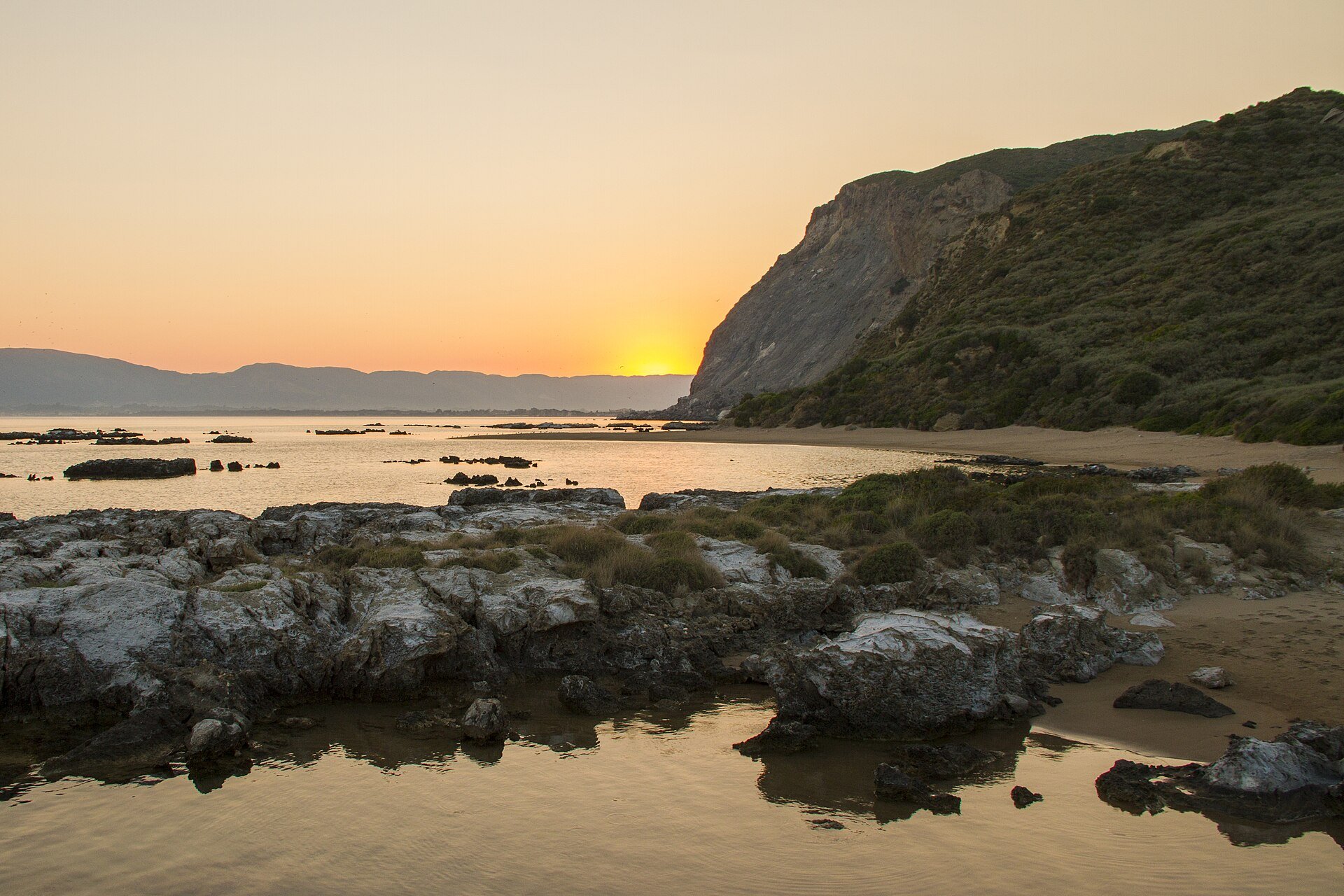
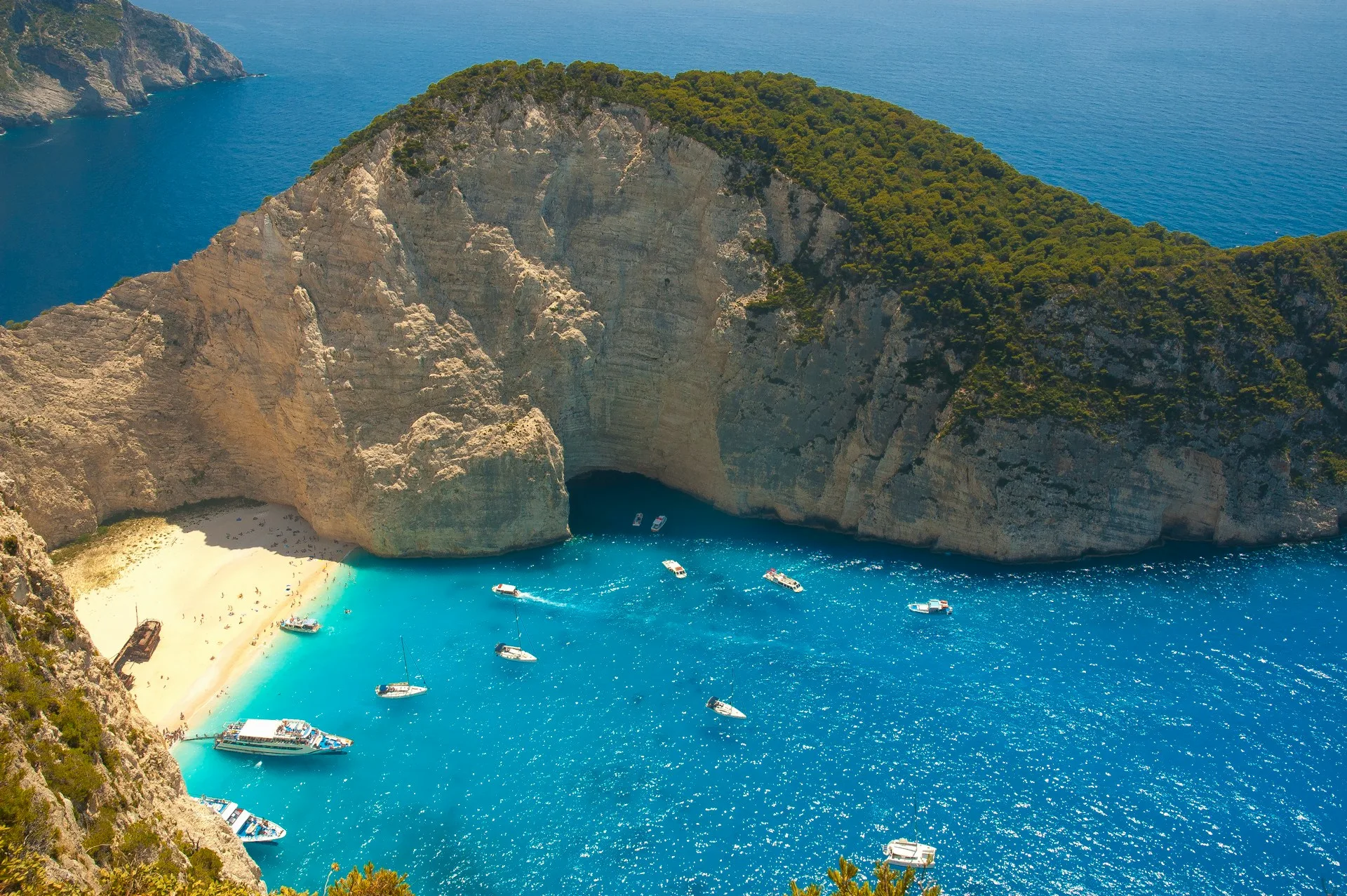
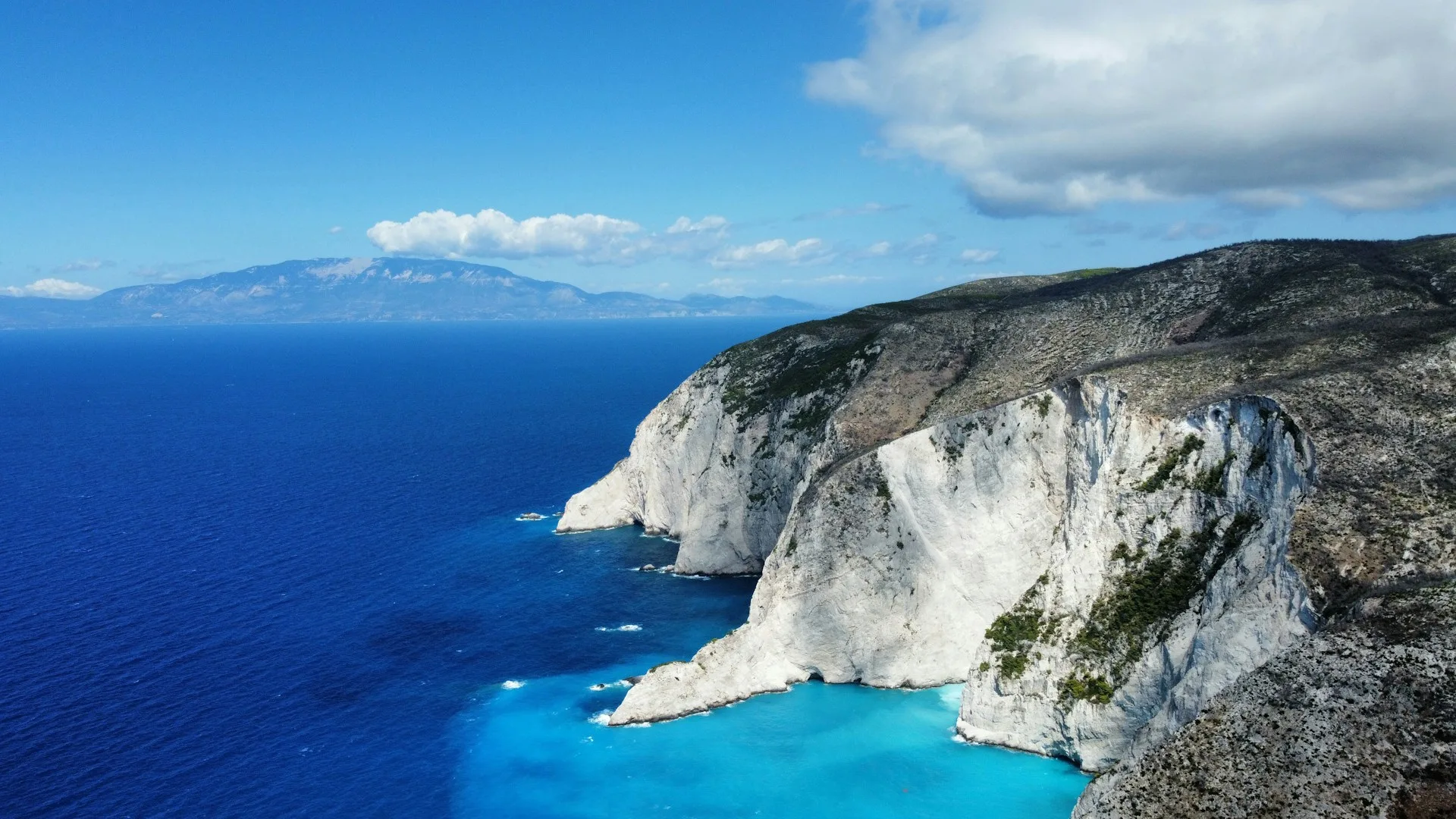
The flat limestone platforms at the water's edge warm up in the sun and make perfect natural sunbeds — bring a thin mat, lie flat on the warm rock, and you understand why locals prefer this to sand.
Plakaki — Natural Rock Platforms for Wild Swimmers
Plakaki isn’t a beach in the conventional sense. There’s no sand. Instead, the western coast of Zakynthos offers something more interesting: vast flat shelves of pale limestone, smoothed by centuries of wave action, that step down into the clearest water on the island. For swimmers who prefer rock to sand, this is as good as it gets.
What Awaits You
The name “plakaki” translates roughly as “little flat stones” — an accurate description of the landscape. The coastline here consists of horizontal limestone platforms, some barely above waterline, others a metre or two elevated, that create a series of natural terraces for swimming, sunbathing, and entry into the sea.
The water is deep and extraordinarily clear. Unlike sandy beaches where the bottom gradually deepens, the rock platforms here descend into 2-3 metres of water almost immediately. Swimmers need to be comfortable with open water — there’s no gentle wading entry. But the trade-off is visibility that can reach 25+ metres and an undisturbed underwater landscape of white rock, sea grass, and fish.
The platforms themselves retain the sun’s heat well into the afternoon, making them genuinely comfortable for lying out. The rough limestone can be abrasive, so a thin foam mat or towel is worth bringing.
Getting There
Plakaki requires a hike. The approach is from the west coast road between Kiliomeno and the Navagio lookout area. Look for a small trail marker off the road — local knowledge helps here. The walk is around 15-20 minutes each way, partly through low scrub and partly along the clifftop before descending to the water. The path is manageable but not marked or maintained: wear proper shoes and don’t attempt it in flip-flops.
No facilities of any kind exist once you’re on the rock.
For Snorkellers
The rocky bottom and deep clear water make Plakaki an excellent snorkelling location. Octopus are frequently spotted in the crevices of the limestone. Bream, wrasse, and occasionally larger fish are visible in the deeper water. The absence of regular visitors means the marine life is less habituated to human presence than at busier spots.
Practical Considerations
- Bring more water than you think you need
- Reef shoes are highly recommended for water entry
- The limestone can be slippery when wet at the waterline
- Mobile phone signal is unreliable — let someone know your plans
- Shade is available under cliff overhangs in the afternoon
Best Time to Visit
June through September. The west coast catches the afternoon sun well and can be exposed to wind — check conditions before heading out. Morning visits avoid the strongest afternoon sun, but afternoon visits benefit from warmer rock temperatures and better snorkelling light.